Add: R503-506, Hongxi Commercial Building. No.23 Guantai Road. Nancheng District, Dongguan City, Guangdong Province, China.523000
Add: R503-506, Hongxi Commercial Building. No.23 Guantai Road. Nancheng District, Dongguan City, Guangdong Province, China.523000


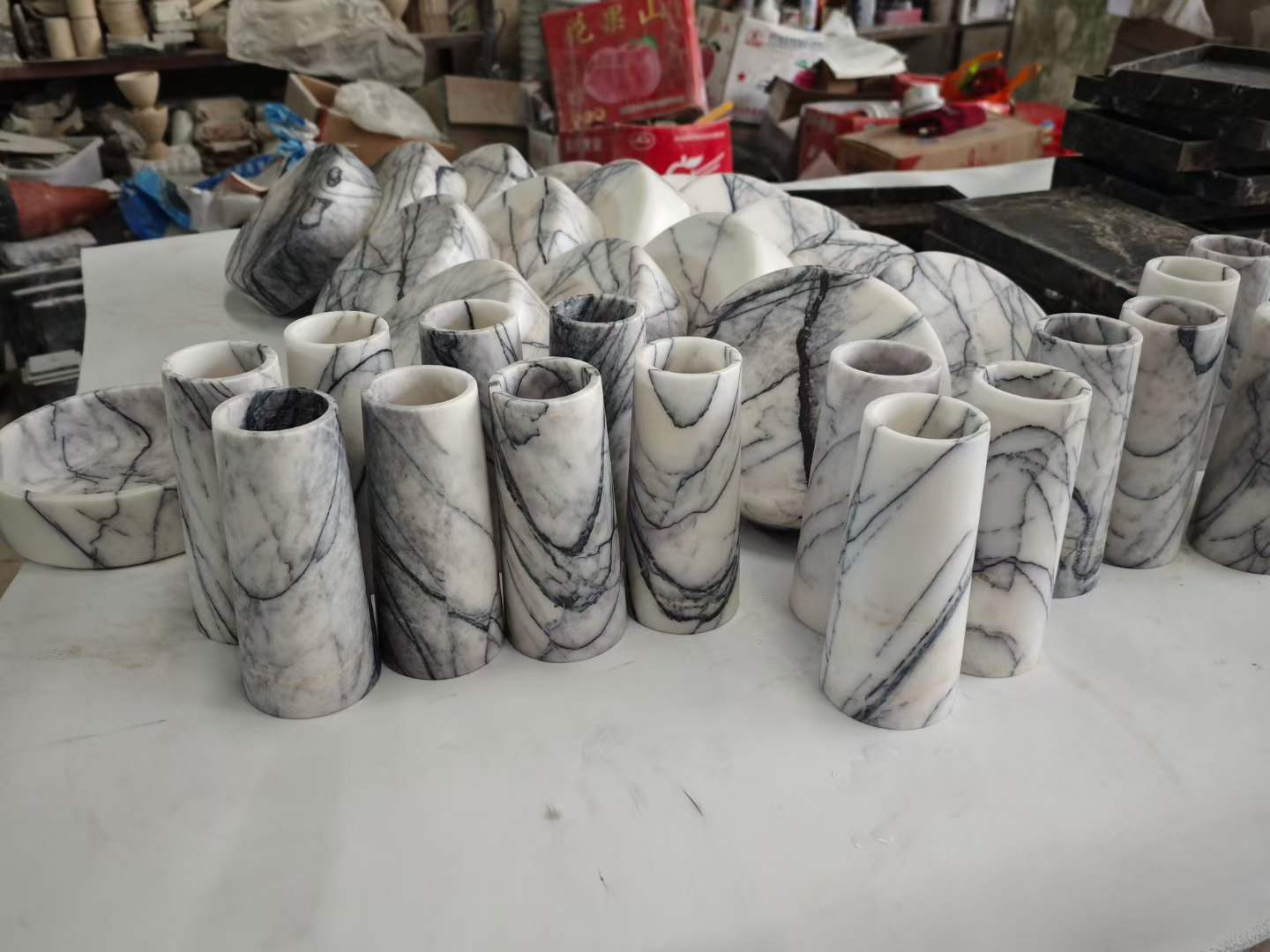
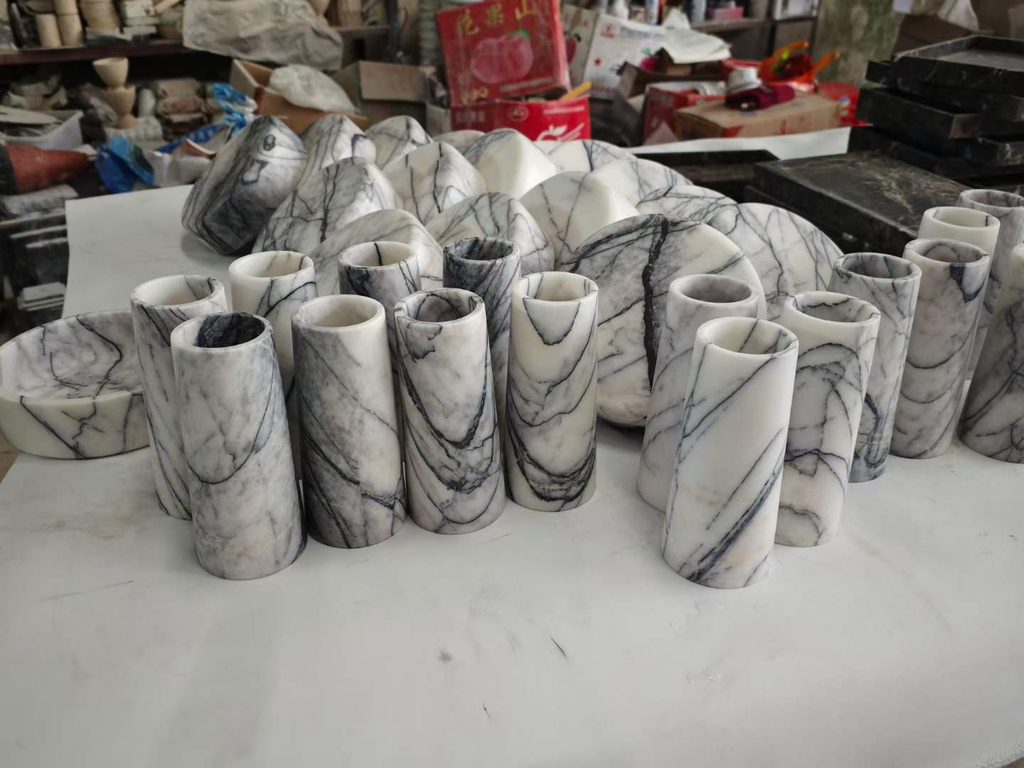
A natural stone vase or decorative bowl begins with a material that already has its own visual character. Before a piece is shaped or finished, the stone contains the colors, lines, and patterns that will influence its final appearance.
For home décor brands, wholesalers, and interior designers, understanding these differences is an important part of developing a collection. The material should work with the product’s shape, the collection’s style, and the expectations of the end customer.
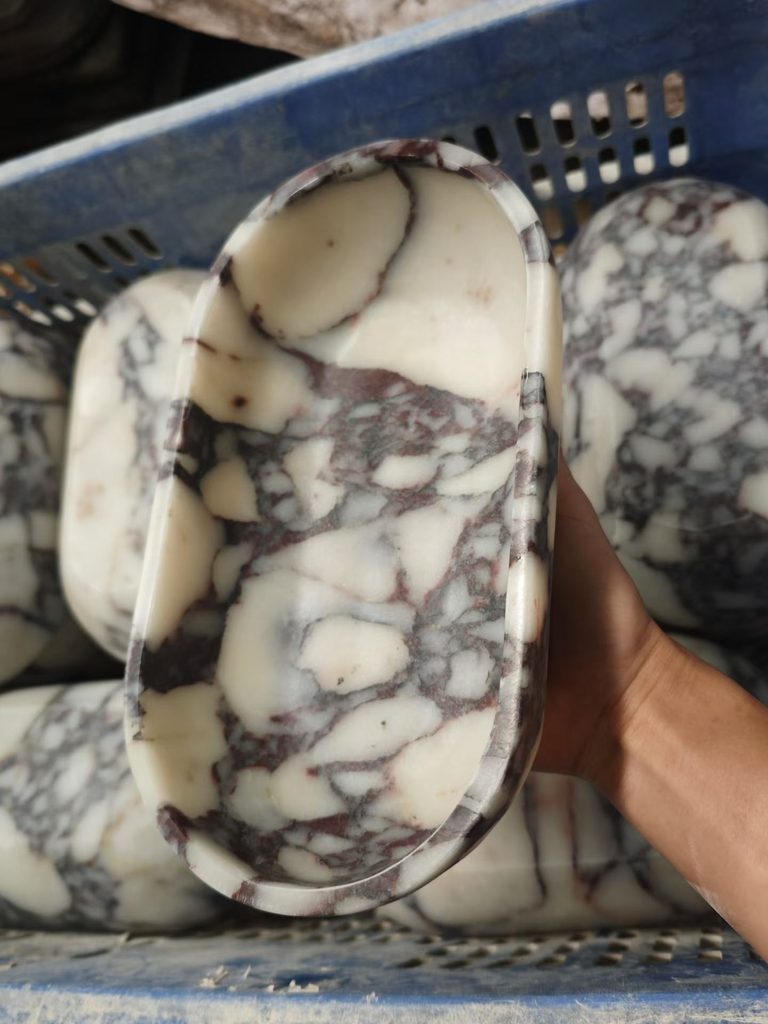
The raw materials shown here offer a range of visual effects, from pale backgrounds with fine gray lines to bold, contrasting patterns and layered bands.
Each creates a different impression. Subtle veining can suit a quieter, more restrained collection, while stronger patterns can give a simple decorative object a more expressive appearance.
When reviewing materials, consider more than a small close-up. Images of larger blocks or slabs help show how widely the pattern varies and whether it remains consistent enough for the intended collection.
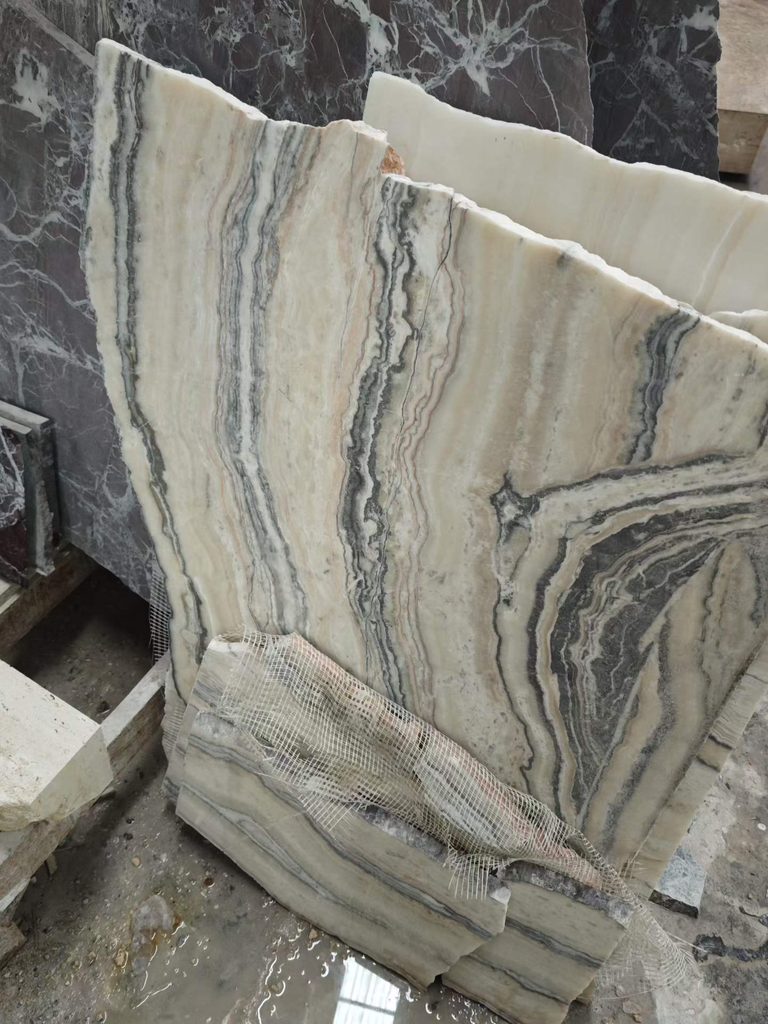
A stone’s appearance changes when it is cut and shaped.
On a tall cylindrical vase, veins may travel vertically, diagonally, or around the curved surface. A shallow bowl reveals the pattern across its interior and rim. A rounded object presents the same material from several angles.
This means a material selected from a flat image may look different on the finished product. Reviewing a sample in the intended shape helps buyers assess how the pattern, proportions, and surface finish work together.
For strongly patterned materials, a simple silhouette can give the stone room to stand out.
Natural stone products should be assessed as a coordinated collection with individual differences.
Even pieces made from the same selected material may vary in background tone, vein placement, and pattern density. The raw blocks and finished pieces shown here illustrate why a single photograph cannot represent every item in a production batch.
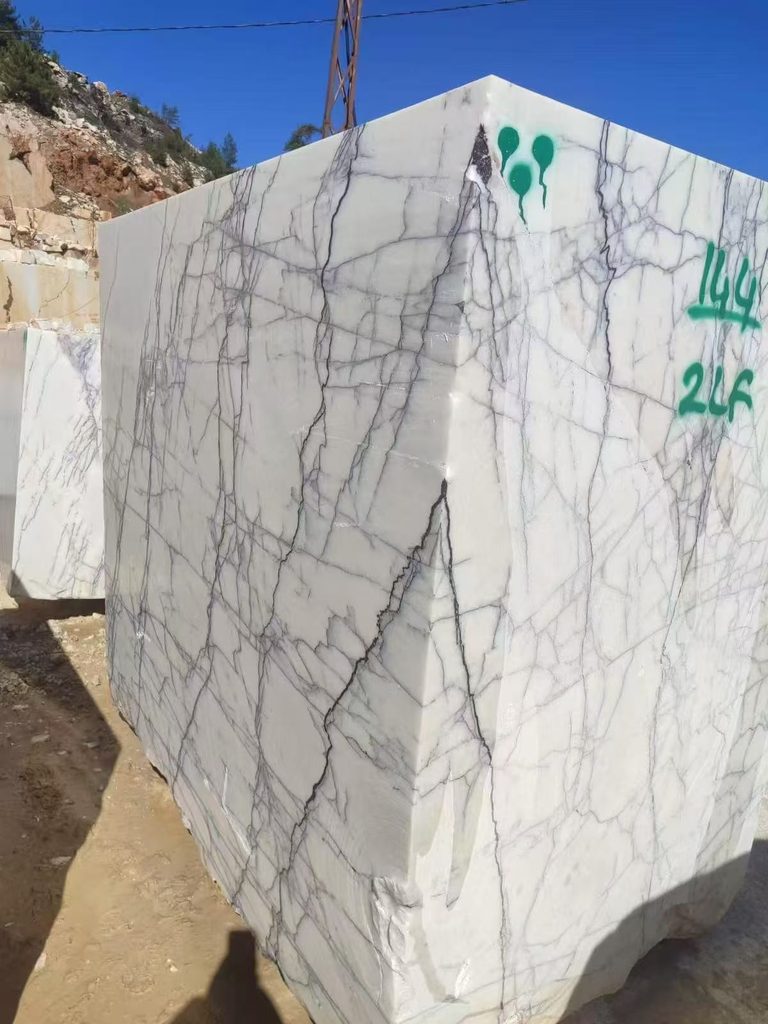
Before confirming an order, buyers and suppliers should agree on an acceptable range of variation. Useful reference points include:
Natural variation should be discussed separately from quality requirements. Differences in veining do not replace the need for agreed standards for finish, edges, and product stability.
The intended use should guide the product specification.
A decorative vessel, a vase intended to hold water, and a bowl intended for food contact require different considerations. Appearance alone does not establish whether a product is suitable for a particular use.
Share these requirements at the inquiry stage so that the construction, finish, and any necessary lining or testing can be discussed before production.
A cohesive stone décor collection does not require identical patterns across every piece. A shared color palette, complementary shapes, and a consistent finish can connect vases, decorative bowls, and sculptural accessories.
At Creative Power Homeware, we help B2B buyers explore natural stone options for home décor collections and custom projects.
To discuss your next collection, send us your preferred product shapes, approximate dimensions, quantities, and material references. Please also include the intended use and delivery market so we can review the requirements with you.